ABOUT
Learning to see the whole problem.
Long before my work centered on institutional energy infrastructure, I worked in remote Tanzania with a Maasai community organization, helping develop distributed solar installations and radio communication systems for community centers.
In a setting where reliable energy and communications could have immediate consequences for the people who depended on them, the connection between infrastructure and human outcomes was impossible to miss. That experience left me with a question that has followed me ever since: what will create the greatest value for the people and institutions an infrastructure system is meant to serve—and what has to come together to make that possible?
Read the insight on how Tanzania shaped this perspective →Infrastructure was not an abstract technical system. Its value was defined by what it enabled.
THE JOURNEY
A career built by moving closer to the decision.
01 / Learn how energy systems perform in practice
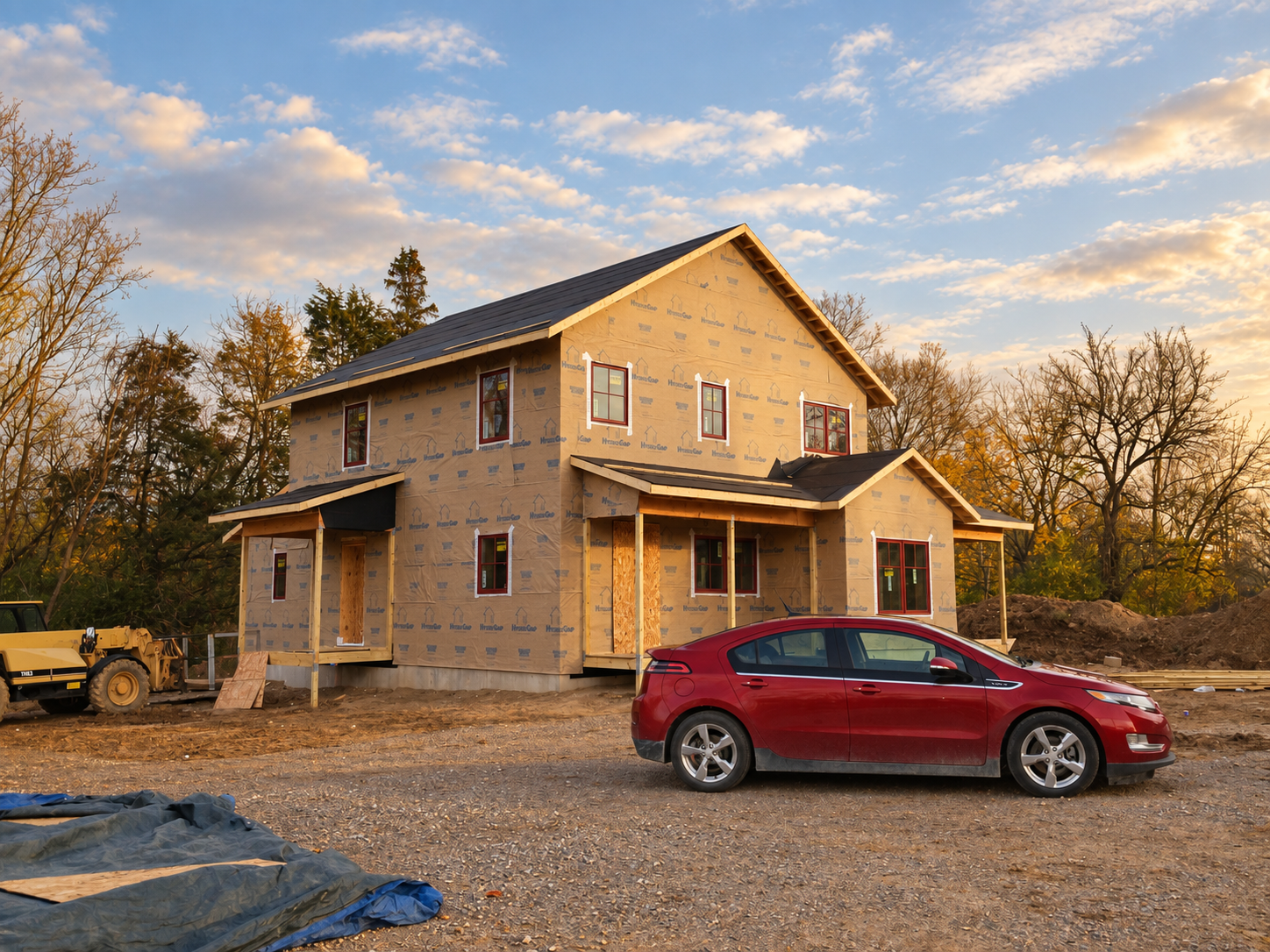
Much of my early energy work was grounded at the building level: residential and commercial energy audits, building-performance modeling, and investment analysis. It taught me to look beyond equipment specifications to how buildings actually perform—how envelope, mechanical systems, controls, operations, occupant behavior, economics, and design choices interact. It also taught me that achieving a desired outcome almost always requires tradeoffs among technical performance, cost, operations, and other priorities.
Read the insight on building a high-performance home →02 / Build the conditions for adoption
The next phase of my career took me through entrepreneurial ventures, nonprofit organizations, government-supported initiatives, and growing energy businesses. Much of the work involved creating the conditions around emerging technologies—organizations, programs, funding mechanisms, partnerships, customer demand, and markets—that allowed technically promising ideas to move toward adoption. That period also included founding and scaling a clean-energy organization from $33,000 to $8 million in annual revenue, building a team of more than 20, and overseeing more than $100 million in implemented projects. The experience taught me that feasibility is only the beginning. A project also needs an institutional, economic, and commercial pathway—and leadership capable of aligning people, capital, partners, and delivery around it.
03 / Integrate the decision
Over time, my work moved closer to the decision itself—from market development and commercialization to institutional customers, business cases, commercial structures, physical assets, contracts, operations, and implementation. Seeing the same kinds of decisions from several directions reinforced that technical feasibility is only one part of the picture; lifecycle economics, organizational capacity, customer priorities, operating realities, and risk matter just as much. That progression is why my work today often sits between disciplines, clarifying what must align for a sound opportunity to become an executable project.
THE FOUNDATION
The disciplines behind the perspective.
My academic background helps explain why I gravitated toward this kind of work. Urban planning taught me to see infrastructure, institutions, economics, and the built environment as parts of a larger system. Social work added an understanding of organizations, people, incentives, and institutional behavior. Philosophy strengthened problem framing and decision logic. English reinforced the importance of clear writing and making complicated ideas understandable. I have never approached energy as a purely technical subject because my training never taught me to separate the technical problem from the people and institutions that have to act on it.
Read the insight on why a philosopher develops industrial projects →SELECTED WORK
The journey is best understood through the work.
Selected Work traces some of the places where this perspective has been applied in practice—specific infrastructure, commercial, and institutional questions and projects I have helped evaluate, structure, negotiate, and advance.
View Selected Work